While our VICK Y-DNA Surname Project participants almost all test at FamilyTree DNA we found a couple of matches at the old Relative Genetics (now Ancestry DNA) who didn't have the VICK surname. These two men did have the same surname and matching Y-DNA signatures. The two men didn’t match other men with their surname in their Relative Genetics project. Because our VICK ancestor’s Y-DNA signature (haplotype) is fairly rare (we are haplogroup Q1a3*) we were reasonably confident these two men's patrilineal ancestor was a VICK (their research can't extend their line in a county with many VICKs around the time of their ancestor’s birth in 1810). We ran into a problem trying to figure out which of our VICK ancestor’s sons these two men were descended from. They didn’t have enough markers to isolate a line and Relative Genetics didn’t test all of the markers that are branch informative for the VICKs. Compounding the problem was that the two men didn't want to submit new samples for testing at FTDNA. So, we seemed to be at a dead end.
When 23andMe came along we thought 23andMe was worth at try. We looked for someone to test in the two men's line so we could compare their results with the VICKs in our 23andMe project. The nice thing about 23andMe was that we could test women who were descendants of our VICK ancestor and non-patrilineal male VICK descendants. We weren't limited to male VICKs.
While we still have to go through the pedigrees and ensure we can find no other explanation, I still have to smile when I look at our 23andMe match of a non-patrilineal male VICK with a female descendant of the two men's line.
This match at least makes me see that 23andMe has promise. By the way, the match was in the “Distant Cousin” category for those who are looking at them at 23andMe and wondering about how useful they may be. The predicted range was 9th to 10th cousin, which could well be correct. We haven't had a match between two project members who are so distantly related in the VICK line.
Sunday, October 25, 2009


Saturday, October 3, 2009
Vick and Allied Families DNA Project Is Digging for Roots
On October 3, 2009, the Vick and Allied Families DNA Project had 43 members. That was a far better start than I expected. We will have a few more project members in the next week as we confirm that others also ordered kits.
Of the 43 project members, we know the Vick lines of 25 (12 project members are spouses or do not have a Vick line). Two other project members come from lines (Ezekiel Strickland and Barry Holland) which Y-DNA testing shows are very likely descended from Joseph. An additional two members may have an unproven Vick female ancestor. Further, two project members are descended from a Strickland line that does not share a Y-DNA signature with the Joseph Vick descendants. The Stricklands and the Vicks have many family connections.
Ten of this project’s members are also members of the VICK Y-DNA Surname Project, and they share Joseph’s Y-DNA signature. Having a confirmed Y-DNA match will be beneficial in making comparisons to closely related members (male and female).
We are using a company named 23andMe for our testing in this project since the company we use for our VICK Y-DNA Surname Project does not offer this type of testing. 23andMe has a new tool called “Relative Finder” that I am beta testing. Relative Finder will be very useful.
Relative Finder has two parts. The first part finds expected relatives in the 23andMe database. The second part allows you to send a share request to a match but you won't know the person's identity unless your share request is accepted.
At the moment I can see "matches" in the 23andMe database (although I don't have access to their identity unless they are already sharing with me). For each match Relative Finder shows me the number of shared segments and % of Shared DNA, as well as the mitochondrial haplogroup and Y haplogroup (for a male).
Relative Finder predicts the degree of relationship. I was surprised at how many matches I found using Relative Finder. I really didn’t expect many since I didn’t know of any cousin (at least one in a genealogical timeframe) who had tested at 23andMe and had results. Relative Finder puts matches in one of several buckets: “Parent or Child” (my mother, my son, and my daughter were there as I expected); “Sibling (my son and daughter show in that category on each other’s lists). Relative Finder has other buckets (like “Aunt/Uncle, Nephew or Niece;” and “Grandparent, Grandchild, or Half Sibling”) and various degrees of cousins. While Relative Finder gives the expected degree of cousin, e.g. second cousin, there is a window each could fall into, e.g. third to tenth cousin. Relative Finder found I matched what appeared to be two fourth cousins, one fifth cousin, two sixth cousins, two seventh cousins, and 224 “distant cousins.”
I hadn’t noticed that one of the “distant” cousins and I had a common stretch of DNA even though we were already sharing. When you share with a lot of people, it can be hard to keep up with those that get their results after they ask to share. You can then miss the fact that they match. Relative Finder is a nice tool for checking periodically for this situation and for getting an idea of how closely related you are.
Finding these distant cousin matches could be helpful in determining the birth surname of some of the females in our pedigrees (unfortunately, we don’t know many females birth surnames, especially if they were born before the 1850 census). While Relative Finder may be helpful in tracing these female lines, it will be a lot of work for both parties to try to figure out who they inherited their common data stretch from.
Since not everyone who tested at 23andMe is interested in ancestry, some of the unexpected matches may not want to share. Some of these matches probably tested for health risk information and not to find relatives. Still, we might find a few people who are interested in sharing even if it isn’t their primary reason for testing at 23andMe.
For my mother Relative Finder found one “Parent or Child” (me); two “Grandparent, Grandchild or Half Sibling (my son and daughter); one third cousins, five fourth cousins, four fifth cousins, and 201 “Distant Cousins.”
Unlike with our Y-DNA project where it doesn't make much sense to test two closely related men, I can see from the Relative Finder beta results that testing even full siblings will be beneficial. Siblings can have some very different matches. While my son and daughter have five shared matches, my son has eight matches that my daughter doesn't have. My daughter has six matches that my son doesn't have. I haven't tried to sort out the "distant cousin" matches, but I bet I would find the same story. It is possible some of the differences might turn up in the "distant cousin" category.
In the next three weeks we should begin to have results. We will then get a better idea of how our project is progressing.
Of the 43 project members, we know the Vick lines of 25 (12 project members are spouses or do not have a Vick line). Two other project members come from lines (Ezekiel Strickland and Barry Holland) which Y-DNA testing shows are very likely descended from Joseph. An additional two members may have an unproven Vick female ancestor. Further, two project members are descended from a Strickland line that does not share a Y-DNA signature with the Joseph Vick descendants. The Stricklands and the Vicks have many family connections.
Ten of this project’s members are also members of the VICK Y-DNA Surname Project, and they share Joseph’s Y-DNA signature. Having a confirmed Y-DNA match will be beneficial in making comparisons to closely related members (male and female).
We are using a company named 23andMe for our testing in this project since the company we use for our VICK Y-DNA Surname Project does not offer this type of testing. 23andMe has a new tool called “Relative Finder” that I am beta testing. Relative Finder will be very useful.
Relative Finder has two parts. The first part finds expected relatives in the 23andMe database. The second part allows you to send a share request to a match but you won't know the person's identity unless your share request is accepted.
At the moment I can see "matches" in the 23andMe database (although I don't have access to their identity unless they are already sharing with me). For each match Relative Finder shows me the number of shared segments and % of Shared DNA, as well as the mitochondrial haplogroup and Y haplogroup (for a male).
Relative Finder predicts the degree of relationship. I was surprised at how many matches I found using Relative Finder. I really didn’t expect many since I didn’t know of any cousin (at least one in a genealogical timeframe) who had tested at 23andMe and had results. Relative Finder puts matches in one of several buckets: “Parent or Child” (my mother, my son, and my daughter were there as I expected); “Sibling (my son and daughter show in that category on each other’s lists). Relative Finder has other buckets (like “Aunt/Uncle, Nephew or Niece;” and “Grandparent, Grandchild, or Half Sibling”) and various degrees of cousins. While Relative Finder gives the expected degree of cousin, e.g. second cousin, there is a window each could fall into, e.g. third to tenth cousin. Relative Finder found I matched what appeared to be two fourth cousins, one fifth cousin, two sixth cousins, two seventh cousins, and 224 “distant cousins.”
I hadn’t noticed that one of the “distant” cousins and I had a common stretch of DNA even though we were already sharing. When you share with a lot of people, it can be hard to keep up with those that get their results after they ask to share. You can then miss the fact that they match. Relative Finder is a nice tool for checking periodically for this situation and for getting an idea of how closely related you are.
Finding these distant cousin matches could be helpful in determining the birth surname of some of the females in our pedigrees (unfortunately, we don’t know many females birth surnames, especially if they were born before the 1850 census). While Relative Finder may be helpful in tracing these female lines, it will be a lot of work for both parties to try to figure out who they inherited their common data stretch from.
Since not everyone who tested at 23andMe is interested in ancestry, some of the unexpected matches may not want to share. Some of these matches probably tested for health risk information and not to find relatives. Still, we might find a few people who are interested in sharing even if it isn’t their primary reason for testing at 23andMe.
For my mother Relative Finder found one “Parent or Child” (me); two “Grandparent, Grandchild or Half Sibling (my son and daughter); one third cousins, five fourth cousins, four fifth cousins, and 201 “Distant Cousins.”
Unlike with our Y-DNA project where it doesn't make much sense to test two closely related men, I can see from the Relative Finder beta results that testing even full siblings will be beneficial. Siblings can have some very different matches. While my son and daughter have five shared matches, my son has eight matches that my daughter doesn't have. My daughter has six matches that my son doesn't have. I haven't tried to sort out the "distant cousin" matches, but I bet I would find the same story. It is possible some of the differences might turn up in the "distant cousin" category.
In the next three weeks we should begin to have results. We will then get a better idea of how our project is progressing.
Monday, September 21, 2009
The Vick and Allied Families DNA Project
After my last blog I realized we should rename our new DNA project. We are now calling it the VICK and Allied Families DNA Project. I should also say that while we would like to have members of every VICK clan in our project, so far all of the project members are descendants of Joseph Vick of Lower Parish, Isle of Wight County, Virginia (Joseph1), or an allied family (or both). Among the allied families in our project are the STRICKLANDs, the JOYNERs, and the HOLLANDs.
The STRICKLANDs have a deep history with the VICKs that goes back to Isle of Wight County. In Joseph Vick of Lower Parish, Isle of Wight County, Virginia and His Descendants the authors noted several associations among the VICKs and the STRICKLANDs. For example, on pages 62 and 63 of the book when discussing Robert3 (Robert2, Joseph1) the authors say “From the probable ages of his sons, it seems likely that Robert married twice. A glance at the names associated with his many land transactions will suggest his close association with the Strickland and Taylor families, with whom there may have been some relationship…Mathew STRICKLAND had daughters Sarah, Ann, Elizabeth and Jane all of whom were unmarried at the time of his death and of whom Elizabeth and Jane remain untraced.
We have two STRICKLAND descendants in our project. One is a descendant of Ezekiel STRICKLAND who was born about 1809, probably in North Carolina. Apparently, there is a brick wall at Ezekiel in tracing this line back. Two men who are descendants of Ezekiel have been Y-DNA tested. Their Y-DNA signature (haplotype) matches the signature of the descendants of Joseph1. On the other hand, the Y-DNA signature of the Ezekiel descendants does not match the signature of other southern STRICKLAND men. The match of the Ezekiel STRICKLAND descendants with the Joseph1 descendants may indicate that this branch of the STRICKLAND family descends from Joseph1.
The other STRICKLAND in our project descends from Matthew STRICKLAND (born about 1732 in North Carolina). Because the Y-DNA signature of the two STRICKLAND clans is so different, these two clans cannot have shared a common patrilineal ancestor in a genealogical time period (they are not even in the same haplogroup). However, the two STRICKLAND clans could share “recent” ancestry through a non-patrilineal line. Perhaps we will find something in our project that ties the two branches together.
The HOLLAND member of our project is a descendant of Berry HOLLAND, born 4 Jun 1840 in North Carolina. Barry's line also has not been able to be extended. However, his descendants' Y-DNA signature also matches that of the descendants of Joseph1. So there is good reason to believe that Berry may also have been a patrilineal descendant of Joseph1. More precisely, these HOLLANDs match the Y-DNA signature of Joseph1's son Robert.
In Joseph Vick of Lower Parish, Isle of Wight County, Virginia and His Descendants, there are several references to the VICKs and the HOLLANDs . On page 24 when discussing Sarah3 (Joseph2, Joseph1) it says "SARAH, b. ca. 1718; d. after 1784 in Southampton County, Virginia. She m. JAMES GARDNER ca. 1740 in Southampton County…James and Sarah lived in the vicinity of Cypress Swamp…Children surnamed GARDNER: …5. Juda (m. Thomas Holland)….
On page 460 when discussing Robert5 (Robert 4, ?Isaac3, William2, Joseph1) the book says his probable son “REDDIN, b. ca. 1798 [probably in NC]; m. CHARLOTTE HOLLAND."
Finally, we are also very fortunate to have a JOYNER in our project. The JOYNERs also have a long relationship with the VICKs that goes back to Isle of Wight County, Virginia. Our project member is a descendant of Moses JOYNER and Patience VICK (Joseph2, Joseph1). Now have at least one descendant of each of Joseph1’s sons; however, I am not aware of any project member who is a descendant of Joseph1’s daughter Lucy.
One of things we need in our project is the shortest possible line back to Joseph1, and our JOYNER has that distinction so far. He is in the eighth generation of Joseph1’s line. While we have some sixth cousins in our project, most are seventh or eighth cousins. We need some third, fourth, and fifth cousins to increase our chances of weaving common DNA blocks (or half identical regions) into a quilt of shared ancestry. We will have to work on this weakness. Once the 23andMe beta discount period expires, it will probably be harder to attract new project members.
The STRICKLANDs have a deep history with the VICKs that goes back to Isle of Wight County. In Joseph Vick of Lower Parish, Isle of Wight County, Virginia and His Descendants the authors noted several associations among the VICKs and the STRICKLANDs. For example, on pages 62 and 63 of the book when discussing Robert3 (Robert2, Joseph1) the authors say “From the probable ages of his sons, it seems likely that Robert married twice. A glance at the names associated with his many land transactions will suggest his close association with the Strickland and Taylor families, with whom there may have been some relationship…Mathew STRICKLAND had daughters Sarah, Ann, Elizabeth and Jane all of whom were unmarried at the time of his death and of whom Elizabeth and Jane remain untraced.
We have two STRICKLAND descendants in our project. One is a descendant of Ezekiel STRICKLAND who was born about 1809, probably in North Carolina. Apparently, there is a brick wall at Ezekiel in tracing this line back. Two men who are descendants of Ezekiel have been Y-DNA tested. Their Y-DNA signature (haplotype) matches the signature of the descendants of Joseph1. On the other hand, the Y-DNA signature of the Ezekiel descendants does not match the signature of other southern STRICKLAND men. The match of the Ezekiel STRICKLAND descendants with the Joseph1 descendants may indicate that this branch of the STRICKLAND family descends from Joseph1.
The other STRICKLAND in our project descends from Matthew STRICKLAND (born about 1732 in North Carolina). Because the Y-DNA signature of the two STRICKLAND clans is so different, these two clans cannot have shared a common patrilineal ancestor in a genealogical time period (they are not even in the same haplogroup). However, the two STRICKLAND clans could share “recent” ancestry through a non-patrilineal line. Perhaps we will find something in our project that ties the two branches together.
The HOLLAND member of our project is a descendant of Berry HOLLAND, born 4 Jun 1840 in North Carolina. Barry's line also has not been able to be extended. However, his descendants' Y-DNA signature also matches that of the descendants of Joseph1. So there is good reason to believe that Berry may also have been a patrilineal descendant of Joseph1. More precisely, these HOLLANDs match the Y-DNA signature of Joseph1's son Robert.
In Joseph Vick of Lower Parish, Isle of Wight County, Virginia and His Descendants, there are several references to the VICKs and the HOLLANDs . On page 24 when discussing Sarah3 (Joseph2, Joseph1) it says "SARAH, b. ca. 1718; d. after 1784 in Southampton County, Virginia. She m. JAMES GARDNER ca. 1740 in Southampton County…James and Sarah lived in the vicinity of Cypress Swamp…Children surnamed GARDNER: …5. Juda (m. Thomas Holland)….
On page 460 when discussing Robert5 (Robert 4, ?Isaac3, William2, Joseph1) the book says his probable son “REDDIN, b. ca. 1798 [probably in NC]; m. CHARLOTTE HOLLAND."
Finally, we are also very fortunate to have a JOYNER in our project. The JOYNERs also have a long relationship with the VICKs that goes back to Isle of Wight County, Virginia. Our project member is a descendant of Moses JOYNER and Patience VICK (Joseph2, Joseph1). Now have at least one descendant of each of Joseph1’s sons; however, I am not aware of any project member who is a descendant of Joseph1’s daughter Lucy.
One of things we need in our project is the shortest possible line back to Joseph1, and our JOYNER has that distinction so far. He is in the eighth generation of Joseph1’s line. While we have some sixth cousins in our project, most are seventh or eighth cousins. We need some third, fourth, and fifth cousins to increase our chances of weaving common DNA blocks (or half identical regions) into a quilt of shared ancestry. We will have to work on this weakness. Once the 23andMe beta discount period expires, it will probably be harder to attract new project members.
Monday, September 14, 2009
We Have Started Our New VICK DNA 23andMe Project
We have started our new VICK DNA project at 23andMe. We probably should have called it VICK and Allied Lines DNA Project. The idea of a surname project is new to 23andMe, and we may be their first (I have not heard anyone discuss another one). That could be great because they may need a “large” group with pedigrees to help them figure out how to link people together through shared DNA.
We have people in our project who are descended from four of Joseph of Isle of Wight County, Virginia’s five sons – Richard, John, Robert, and William. So in that clan we are just missing Joseph2’s line. So far none of the other VICK clans have joined.
Eighteen or nineteen kits have been ordered (that includes five kits for spouses or mothers who do not have a known VICK line). We have seven members who are part of our Y-DNA project, so they should be very helpful. One nice thing is we have two men and five women who have VICK lines but could not test in our VICK Y-DNA project. So we are extending our reach into VICK DNA.
We are also trying to interest STRICKLANDs and HOLLANDs in joining our project. Any allied lines would be helpful.
We have people in our project who are descended from four of Joseph of Isle of Wight County, Virginia’s five sons – Richard, John, Robert, and William. So in that clan we are just missing Joseph2’s line. So far none of the other VICK clans have joined.
Eighteen or nineteen kits have been ordered (that includes five kits for spouses or mothers who do not have a known VICK line). We have seven members who are part of our Y-DNA project, so they should be very helpful. One nice thing is we have two men and five women who have VICK lines but could not test in our VICK Y-DNA project. So we are extending our reach into VICK DNA.
We are also trying to interest STRICKLANDs and HOLLANDs in joining our project. Any allied lines would be helpful.
Friday, September 11, 2009
The Great Family of Joseph Vick Before 1675 to 1987 May Be Reprinted
In an earlier blog I asked if there were any good Vick family history books or short histories about the Vick families other than those I listed in the blog. While I have not learned of any new books or short histories, I have learned that Conner Vick is interested in republishing The Great Family of Joseph Vick Before 1675 to 1987. The authors of the book were his father, Samuel B. Vick, Sr., his brother Samuel B. Vick, Jr., and his sister Lorrayne Vick Donnell. Conner is exploring ways to have the book reprinted. If you would like a copy of the book, you might write him at the address below to let him know of your interest. He is trying to determine how many books to print.
Conner Vick
7329 Pope Watervalley Road
Pope, Mississippi 38658
Conner does not have an estimated printing date or price since he has not finalized the details.
Conner Vick
7329 Pope Watervalley Road
Pope, Mississippi 38658
Conner does not have an estimated printing date or price since he has not finalized the details.
Thursday, September 10, 2009
Interest in Vick Research by Country from My Blog and Web Page Statistics
In my Vick One-Name study, I have found that people with the Vick surname live in the following countries (the number is in parentheses):
U.S. (21,140)
Germany (1,702)
England, Wales, and the Isle of Man (1,147)
Canada (336)
Australia (300)
New Zealand (36)
Switzerland (13)
Spain (12)
South Africa (one listing in the telephone book).
No doubt there are other Vicks scattered around the world that I just have not found. For example, I know from his father that at least one Canadian Vick is in Singapore. One of the purposes of creating this blog and the Vick one-name study page was to make contact with others researching the Vick family or the Vick surname -worldwide. Unfortunately, contacts from people outside of the U.S. have been few and far between.
To get an idea of where people live who might have common Vick research interests I looked at the internet addresses of those visiting either this blog or my Vick One-Name study over the last couple of months. I excluded hits from countries where the search term indicated the person was not looking for information on the Vick surname or Vicks (e.g. the person was searching for information about a different surname in a location mentioned on one of the sites).
By country (excluding countries with just one visit) I had the following number of hits (in parentheses):
U.S. (6240)
U.K. (244)
Australia (29)
Germany (22)
Canada (18)
Brazil (18)
Philippines (3)
South Africa (3)
Spain (2)
France (2)
Italy (2)
Netherlands (2)
To get hits per capita I divided the number of hits by the estimated number of Vicks in the country (I just did so for those countries with the largest Vick populations):
UK (0.21) – population is just for England, Wales, and Isle of Man so the rate is off slightly.
Australia (0.10)
Canada (0.05)
U.S. (0.03)
Germany (0.01)
From the hits per capita it is obvious that I am not doing a good job of reaching people in Germany. The low German penetration may be because the two websites are in English (or American English). I will have to think about ways to improve the number of hits from Germany if I am going to make any contacts there. On the other hand I am surprised that the U.S. is not the leading source on a per capita basis. My conception was that Americans were far more interested in their family history than were people in other countries. Perhaps the higher hit rates in the U.K., Australia, and Canada indicate there is material on the sites that is of interest to researchers outside of the U.S. I just hope we can help each other with our mutual research interests.
U.S. (21,140)
Germany (1,702)
England, Wales, and the Isle of Man (1,147)
Canada (336)
Australia (300)
New Zealand (36)
Switzerland (13)
Spain (12)
South Africa (one listing in the telephone book).
No doubt there are other Vicks scattered around the world that I just have not found. For example, I know from his father that at least one Canadian Vick is in Singapore. One of the purposes of creating this blog and the Vick one-name study page was to make contact with others researching the Vick family or the Vick surname -worldwide. Unfortunately, contacts from people outside of the U.S. have been few and far between.
To get an idea of where people live who might have common Vick research interests I looked at the internet addresses of those visiting either this blog or my Vick One-Name study over the last couple of months. I excluded hits from countries where the search term indicated the person was not looking for information on the Vick surname or Vicks (e.g. the person was searching for information about a different surname in a location mentioned on one of the sites).
By country (excluding countries with just one visit) I had the following number of hits (in parentheses):
U.S. (6240)
U.K. (244)
Australia (29)
Germany (22)
Canada (18)
Brazil (18)
Philippines (3)
South Africa (3)
Spain (2)
France (2)
Italy (2)
Netherlands (2)
To get hits per capita I divided the number of hits by the estimated number of Vicks in the country (I just did so for those countries with the largest Vick populations):
UK (0.21) – population is just for England, Wales, and Isle of Man so the rate is off slightly.
Australia (0.10)
Canada (0.05)
U.S. (0.03)
Germany (0.01)
From the hits per capita it is obvious that I am not doing a good job of reaching people in Germany. The low German penetration may be because the two websites are in English (or American English). I will have to think about ways to improve the number of hits from Germany if I am going to make any contacts there. On the other hand I am surprised that the U.S. is not the leading source on a per capita basis. My conception was that Americans were far more interested in their family history than were people in other countries. Perhaps the higher hit rates in the U.K., Australia, and Canada indicate there is material on the sites that is of interest to researchers outside of the U.S. I just hope we can help each other with our mutual research interests.
Saturday, September 5, 2009
Recording Famous Vicks
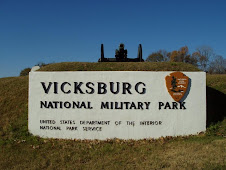
I have tried to record the more famous Vicks on my Vick One-Name Study page. The list includes Henry de Vick, clock maker; Rev. Newit Vick, for whom Vicksburg, Mississippi, is named; James Vick, founder of the Vick Seed Company; William Vick, benefactor of the Clifton Suspension Bridge outside of Bristol, England; Walker Whiting Vick, advisor to U.S. President Woodrow Wilson; Joshua W. Vick, for whom Vicks VapoRub is named; Harold Vick, jazz saxophonist; Graham Vick, CBE, founder of the Birmingham, England, opera company; and Michael Vick, professional American football player (and convicted dog abuser).
I wonder what famous Vicks I have missed. Have I missed a notable Vick in Germany, South Africa, or Canada, or any other county, who I should include in my study? Please let me know if I have missed a Vick who I should include. There are no women on the list above. Surely, I have missed more than one. If you could provide a reference it would be very helpful.
I wonder what famous Vicks I have missed. Have I missed a notable Vick in Germany, South Africa, or Canada, or any other county, who I should include in my study? Please let me know if I have missed a Vick who I should include. There are no women on the list above. Surely, I have missed more than one. If you could provide a reference it would be very helpful.
Subscribe to:
Posts (Atom)


 Posts
Posts


